Maggie's Musical
July 1, 2026
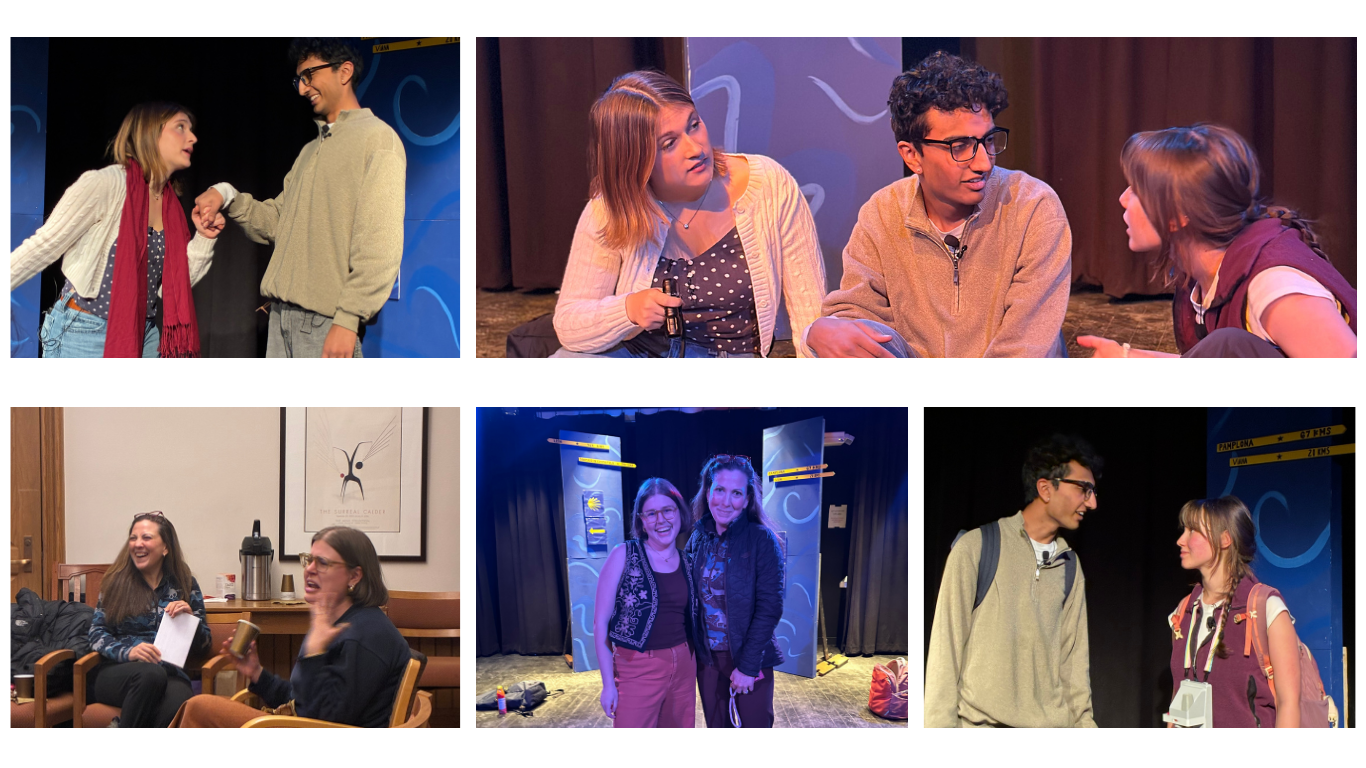
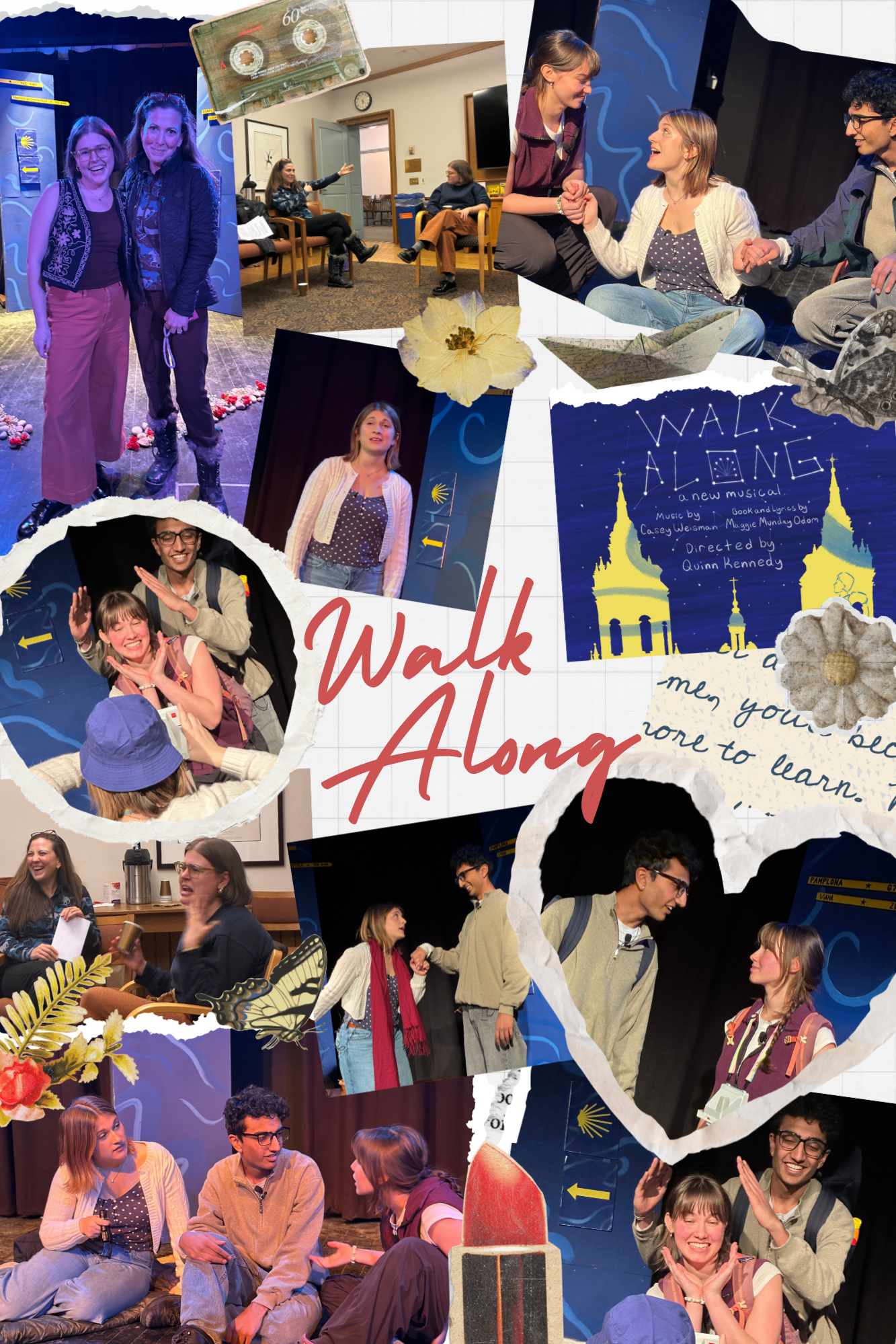
Maggie Munday Odom, a Religious Studies minor student in the class of 2026, revised and developed her new musical Walk Along though an independent study under the guidance of Professor Michelle Molina. Walk Along was co-written by Maggie Munday, who wrote the book and lyrics, and Casey Weisman, a Music Composition (‘26) major who wrote the music. The show follows two siblings, Blake and Dawn, as they walk the Camino de Santiago, the Catholic pilgrimage in Spain, after the loss of their younger sister, June. The two siblings have distinct perspectives on their Protestant family upbringing: after their younger sister's death, Blake recommits to his family's faith, while Dawn turns away from religion and towards an atheist perspective. The narrative jumps between timelines, primarily focusing on the siblings' journey along the Camino with flashbacks to their childhood growing up in and camping in their backyard in the Shenandoah Valley in Virginia. The show explores themes of family, reconciliation, and repairing challenging relationships, especially in the context of loss and different viewpoints. This January, Walk Along was produced on Northwestern’s campus through the student theatre groups Arts Alliance and WAVE, with additional support from the Office of Undergraduate Research and the Performance Studies Department. The show was produced by Lane Ruble (‘27) and directed by Quinn Kennedy (‘28).
The initial inspiration for the show came from Maggie Munday’s lived experience of walking the Camino de Santiago in 2022, on a gap year before beginning her studies at Northwestern. Maggie Munday undertook the Camino alone, arriving in Saint-Jean-Pied-de-Port with no lodging booked beyond the first night and only a backpack of supplies. Throughout 38 days of walking, she traversed the various challenges of this formative journey, finding it physically demanding, mentally consuming, and spiritually provocative. Pilgrims along the Camino often encounter challenges and suffering in stages. The first stage is bodily: blisters, exhaustion, and adaptation. The middle is mental: rumination and spiraling thoughts across flat terrain. The final is spiritual: confrontation with overwhelming questions. These three stages of physical, mental, and spiritual struggle shaped the structure of Walk Along’s narrative.
Maggie Munday’s experience of walking and singing shaped the musical theatre form of Walk Along. During the Camino, Maggie Munday often sang to herself while walking—sometimes familiar songs, sometimes improvised lyrics—using music as a way to process her surroundings. Singing became a somatic experience, something that lived in the body and connected with emotion and spirit. While Maggie Munday’s background is in playwriting, she realized that the characters needed to sing, not simply speak, because “music could hold what ordinary language could not.” Walk Along’s fifteen songs drew on this understanding of music as embodiment. Casey’s compositions and score of the show encapsulated the journey that the siblings undertake, through landscape, memory, and their challenging relationship with one another.
Maggie Munday and Casey worked together for two years to develop the production, initially drafting the piece in early 2024. In January of 2025, they held a developmental workshop reading directed by Talia Hartman-Sigall (‘25) and produced by Aiden Kaliner (‘26), where they received feedback from their peers which they spent the following year incorporating. This fall, Maggie Munday and Cssey deepened their research into elements of the show, through Maggie Munday’s independent study with Professor Molina, office hours with Dr. Sarah McFarland Taylor, field study experiences with Professor Richard Kieckhefer, and conversations with various individuals who have walked the Camino. This development process included significant changes to the original draft. For instance the character of June was originally absent and instead the third character of Walk Along an embodiment of St. James, the apostle around whom the Camino de Santiago pilgrimage is centered. Feedback that Maggie Munday and Casey received revealed the need for a clearer emotional center. Once introduced, June became the embodiment of loss and memory, which anchored the siblings’ conflict in this winter’s production of Walk Along.
Maggie Munday, Casey, and the entire Walk Along production team’s lived experience informed the development of the show. For instance, Maggie Munday’s religious background informed and complicated the process of writing Walk Along. Raised in a family that moved often due to her father’s military service, Maggie Munday grew up in various Protestant communities. On her Camino, she carried questions about how relationships to family and faith change over the course of growing up. Rather than offering answers, her walk intensified the questions, which became central to the musical’s dramatic tension. In addition, the various religious and spiritual perspectives of Walk Along team members invited rich interfaith conversations about differences in belief throughout the fall and winter rehearsal process.
Maggie Munday’s academic study at the Religious Studies Department at Northwestern University helped her translate these lived experiences and conversations into art. Through courses such as REL 170-0 Introduction to the Study of Religion taught by Professor Molina and her independent study advised by Professor Molina, she learned to think about religion as both personal and collective, and about material culture, ritual, and pilgrimage as systems of meaning. One book she read for her independent study proved especially influential: When God Talks Back by Tanya Luhrmann. Maggie Munday was struck by the last page of Luhrmann’s anthropological book on evangelical Christianity, in which she takes a turn to acknowledge that scholarly research ultimately fails to capture the unknowable aspects of religion. That insight affirmed Maggie Munday’s belief in art as a way to present research and also hold what research cannot. In addition, with the support of the Office of Undergraduate Research, Maggie Munday had the opportunity to present her work at the Institute for Pilgrimage Studies Symposium at College of William and Mary where she connected with scholars and artists who approached pilgrimage from many perspectives, which deepened her commitment to storytelling as means to study religions. Ultimately, Maggie Munday’s work demonstrates how scholarly, experiential, and artistic approaches to religion can coexist. Studying religion analytically in tandem with walking, singing, and engaging in rich conversations allowed her and Casey to combine research with lived experience.
Walk Along is a contemplation on how people search for meaning through bodies in motion, voices in song, and stories that attempt to name what remains, in the end, indescribable. Through Walk Along, Maggie Munday and Casey question whether religion brings people together or drives them apart. They concluded that it does both. Maggie Munday shared her belief that acknowledging our shared questions can create connections. “Through my experience as a Religious Studies minor, I have developed an understanding that despite our many different approaches to spirituality and religion, our shared journey of seeking meaning can unite us and provide opportunities for healing.”